| I.
|
South
Carolina Department of Health and Environmental Control's (DHEC) State
Primary Drinking Water Regulations (SPDWR) September 2000 edition:
|
Section
R.61-58.7,B(6) reads as follows "The operator shall measure the
amounts of all chemicals used each day and calculate the dosages.
The operator shall maintain a written record of all measurements and
dosage calculations. The records shall be kept for a minimum of 3
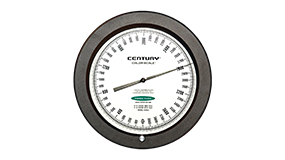
years. "Additionally, Section R.61-58.7, B(9)j reads "Scales for weighing
cylinders shall be calibrated yearly and properly maintained."
|
| II.
|
Environmental
Protection Agency's Risk Management Program (RMP)
|
Section
112 (r), 40 C.F.R. Part 68: "All users storing in excess of
2500 lbs of Chlorine, 5000 lbs of Sulphur Dioxide and 10,000 lbs of
Anhydrous Ammonia shall be required to file a Risk Management Program
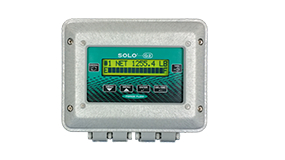
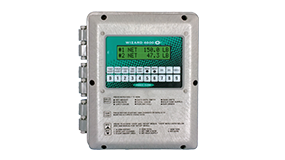
with the EPA." The best method of determining whether these thresholds
have been exceeded is via a weighing scale.
|
| III.
|
Great
Lakes Upper Mississippi River Board of State Public Health & Environmental
Managers
|
Recommended
Standards For Water Works 1997, ie "The 10 states standards":
Part 5 Chemical Application, Section 5.1.2 (e) reads: "Provisions
shall be made for measuring the quantities of chemicals used." Additionally,
Section 5.1.2 (f) reads "Weighing scales: (1) shall be provided for
weighing cylinders at all plants utilizing chlorine gas (2) may be
required for fluoride solution feed (3) should be provided for volumetric
dry chemical feeders, and (4) shall be capable of providing reasonable
precision in relation to average daily dose."
|
| IV.
|
Great
Lakes Upper Mississippi River Board of State Public Health & Environmental
Managers
|
Recommended
Standards For Wastewater Facilities 1997, i.e. "The
10 states standards": Chapter 100 Disinfection, Section 102.41
reads: "Scales: Scales for weighing cylinders and containers shall
be provided at all plants using chlorine gas. At large plants, scales
of the indicating and recording type are recommended. At least a platform
scale shall be provided. The scales shall be of corrosion resistant
material."
|
| V.
|
AWWA
Manual M4: Water Fluoridation Principles and Practices Third edition:
|
Page
26 reads "In any fluoridation installation, except one based on
a sodium fluoride saturator, scales are necessary for weighing the
quantity of dry material to be used in preparing the solution, the
quantity of solution fed, or the quantity of fluoride compound or
hydrofluosilicic acid delivered by the appropriate feeder." In addition,
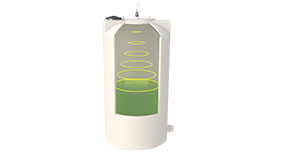
Page 30 reads "Alarms: To prevent underfeeding or loss of feed, alarm
systems can be included in either solution or dry feed systems. The
alarm alerts the operator when the level of solution in the day tank
is low or when it is time to add chemical."
|
| VI.
|
Compressed
Gas Association's CGA G-2 Manual:
|
Page
36 section 8.9.1 reads "Determining when cylinders are empty-Weighing.
The best way to determine if an ammonia cylinder is empty is to weigh
it, without cap, and compare the weight with the tare weight stamped
on the cylinder."
|
| VII.
|
The
Chlorine Institutes Pamphlet 1 "The Chlorine Manual":
|
Page
10 Section 2.8.4 reads "Weighing-Because chlorine is shipped as
a compressed liquefied gas, the pressure in a container depends on
the temperature of the chlorine. The pressure is not related to the
amount of chlorine in the container. Container contents can be determined
accurately only by weighing."
|